
I.Le vocabulaire de la faiblesse féminine dans les textes juridiques romains du IIIe au VIe siècle., Revue historique de droit français et étranger 54, 1976, p. 485‑508 · ici p. 1‑20


Femmes, patrimoine, normes à Byzance images
Femmes, patrimoine, normes à Byzance
Price:
€40.00
Tax included
Presentation
This collection brings together twenty-seven articles and one review published between 1976 and 2006. They explore the relationship between legal norms, ideology, and social practices in Byzantium. The earliest articles accompanied the preparation of the two volumes of Statut de la femme à Byzance, covering the fourth to the seventh century. Later studies broadened the chronological and thematic scope. They examined women’s roles in legal proceedings in later periods and compared the restrictive provisions of canon law developed in the twelfth century with the roles women played in the Church throughout the Byzantine period.
The studies focused above all on property and its transmission, particularly the making of wills, such as that of Gregory of Nazianzus, and the varying extent to which imperial law was observed. They also addressed broader social questions, including whether property was transmitted differently through male and female lines and the exclusion from inheritance of daughters who had received a dowry.
Finally, two articles took positions on broader, much-debated questions: the extent to which Byzantine law was Christianized and the application of imperial legislation in the eastern provinces, especially Egypt.
Table of contents
En guise d’avant-propos : genèse d’une recherche et naissance d’un recueil · p. V
Bibliographie et abréviations · p. IX
II.La situation juridique de la femme à Byzance, Cahiers de civilisation médiévale 20, 1977, p. 145‑176 · ici p. 21‑56
III.L’allaitement : mère ou nourrice ?., Internationaler Byzantinistenkongress. Akten II / 2 (Jahrbuch der Österreichischen Byzantinistik 32 / 2, 1983), p. 549‑558 · ici p. 57‑64
IV.La référence au veuvage dans les papyrus byzantins, Pallas 32, 1985, p. 149‑157 · ici p. 65‑70
V.Au XIe siècle, Byzance : le jeu des normes et des comportements, Familles et biens en Grèce et à Chypre, sous la direction de C. Piault, Paris 1985, p. 197‑210 · ici p. 71‑80
VI.ΠΡΟΙΚΟ∙Υ∙ΠΟΒΟΛΟΝ – ΥΠΟΒΟΛΟΝ – ΥΠΟΒΑΛΛΩ, Mélanges N. Svoronos, t. 1, Rethymno 1986, p. 153‑161 · ici p. 81‑86
VII.L’Égypte byzantine : Biens des parents, biens du couple ?, Eherecht und Familiengut in Antike und Mittelalter (Schriften des Historischen Kollegs. Kolloquien 22), Munich 1992, p. 61‑76 · ici p. 87‑102
VIII.Organisation domestique et rôles sexuels : les papyrus byzantins, Dumbarton Oaks Papers 47, 1993, p. 185‑194 · ici p. 103‑114
IX.Discours et normes : La faiblesse féminine dans les textes protobyzantins, Cahiers Glotz 5, 1994, p. 199‑220 · ici p. 115‑132
X.Difficile et dissimulée : La rébellion contre la famille à Byzance (IVe‑VIIe s.), Ordnung und Aufruhr im Mittelalter. Historische und juristische Studien zur Rebellion, M. Th. Fögen éd., Francfort 1995, p. 265‑286 · ici p. 133‑148
XI.Les filles et la transmission du patrimoine à Byzance : dot et part successorale., La transmission du patrimoine : Byzance et l’aire méditerranéenne, J. Beaucamp et G. Dagron éd., Paris 1998 p. 11‑34 · ici p. 149‑172
XII.Tester en grec à Byzance., ΕΥΨΥΧΙΑ : Mélanges offerts à Hélène Ahrweiler (Byzantina Sorbonensia 16), Paris 1998, p. 97‑107 · ici p. 173‑182
XIII.Le testament de Grégoire de Nazianze., Fontes Minores X, L. Burgmann éd. (Forschungen zur byzantinischen Rechtsgeschichte), Francfort 1998, p. 1‑100 · ici p. 183‑264
XIV.Les femmes et l’espace public à Byzance : le cas des tribunaux, Dumbarton Oaks Papers 52, 1998, p. 129‑145 · ici p. 265‑282
XV.Byzance et l’héritage latin : le discours juridique du VIe au Xe siècle, Ktema 23, 1998 (Public et privé en Grèce ancienne : lieux, conduites, pratiques), p. 475‑484 · ici p. 283‑294
XVI.Incapacité féminine et rôle public à Byzance, Femmes et pouvoirs des femmes à Byzance et en Occident (VIe‑XIe siècle), Lille 1999, p. 23‑36 · ici p. 295‑308
XVII.Exclues et aliénées : les femmes dans la tradition canonique byzantine, Strangers to Themselves : The Byzantine Outsider (Papers from the Thirty-second Spring Symposium of Byzantine Studies, University of Sussex, Brighton, March 1998), D. C. Smythe éd., Aldershot 2000, p. 87‑103 · ici p. 309‑322
XVIII.Le droit successoral relatif aux curiales : Procope et Justinien, Legislazione, cultura giuridica, prassi dell’Impero d’Oriente in età giustinianea tra passato e futuro, Modène 2000, p. 379‑395 · ici p. 323‑334
XIX.Femmes, patrimoine, Église (Byzance, IVe‑VIIe siècle), Article paru en italien, sous le titre « Donne, patrimonio, Chiesa (Bizantio, IV-VII secolo) », dans Il tardo antico alle soglie del due milla. Diritto, religione, società, G. Lanata éd., Pise 2000, p. 249‑265 · ici p. 335‑348
XX.Les femmes et l’Église : droit canonique, idéologie et pratiques sociales à Byzance, Kanon 16, 2000, p. 87‑112 · ici p. 349‑370
XXI.Apion et Praejecta : hypothèses anciennes et nouvelles données., Revue des études byzantines 59, 2001, p. 165‑178 · ici p. 371‑382
XXII.La transmission du patrimoine : législation de Justinien et pratiques observables dans les papyrus., Subseciva Groningana. Studies in Roman and Byzantine Law 7, 2001, p. 1‑13 · ici p. 383‑394
XXIII.Législation et refus de(s) dieu(x) dans l’Antiquité tardive, Nier les dieux, nier Dieu, Aix-en-Provence 2002, p. 345‑359 · ici p. 395‑408
XXIV.Assistance judiciaire aux femmes et rôle du mari d’après les papyrus byzantins., Le rôle et le statut de la femme en Égypte hellénistique, romaine et byzantine (Studia hellenistica), Louvain 2002, p. 23‑40 · ici p. 409‑422
XXV.La christianisation du droit à Byzance : l’exemple du statut des femmes., Cristianità d’Occidente e Cristianità d’Oriente (secoli VI-XI) (Settimane di studio della Fondazione Centro italiano di studi sull’alto Medioevo 51), Spolète 2004, p. 917‑955 · ici p. 423‑444
XXVI.L’histoire du droit byzantin face à la papyrologie juridique : Bilan et perspectives, Fontes Minores, XI, Francfort 2005, p. 5‑55 · ici p. 445‑482
XXVII.La législation matrimoniale à la lumière de la Novelle 22 de Justinien., Comportamenti e immaginario della sessualità nell’alto Medioevo (Settimane di studio della Fondazione Centro italiano di studi sull’alto Medioevo 53), Spolète 2006, p. 913‑948 · ici p. 483‑502
XXVIII.Les « habits neufs » du droit antique, Article paru en italien, sous le titre « Gli “abiti nuovi” del diritto antico », dans Materiali per una storia della cultura giuridica 26, 1996, p. 235‑253 · ici p. 503‑518
Index des sources · p. 519
-
AuthorJoëlle BEAUCAMP
-
Release year2010
-
ISBN978-2-916716-26-8
 Security policy
(edit with the Customer Reassurance module)
 Delivery policy
(edit with the Customer Reassurance module)
 Return policy
(edit with the Customer Reassurance module)
4 other products in the same category
Les sénateurs de Constantinople à l’époque protobyzantine
€60.00
Rated out of 5 stars based on
review(s)
Viewed products

Documents, droit, diplomatique de l’Empire romain tardif
€40.00
Rated out of 5 stars based on
review(s)

Clients also bought
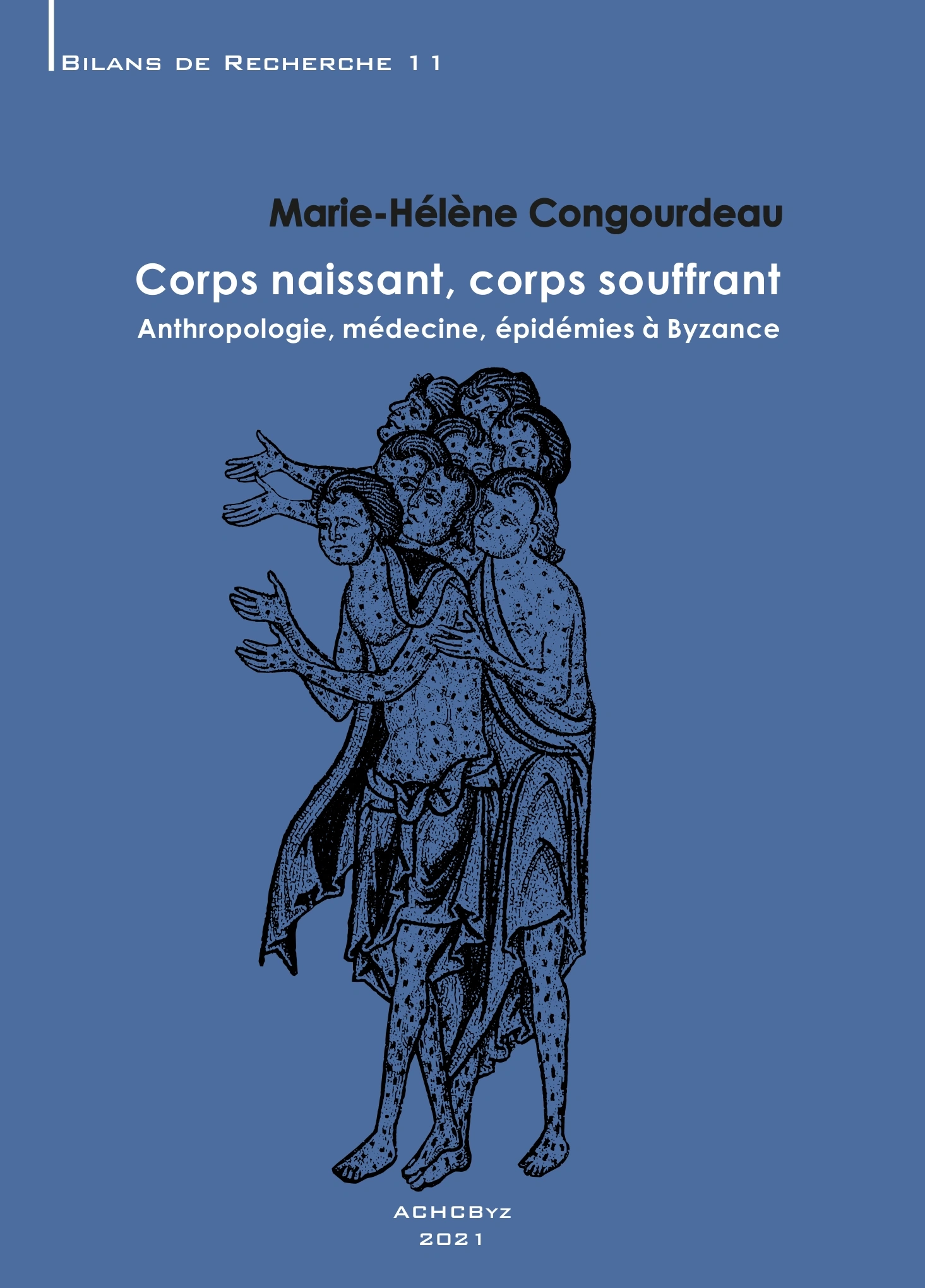
Corps naissant, corps souffrant. Anthropologie, médecine, épidémies à Byzance.
€50.00
Rated out of 5 stars based on
review(s)

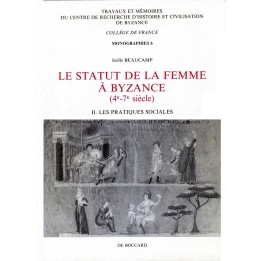
Le statut de la femme à Byzance (4e-7e siècle). II. Les pratiques sociales
€70.00
Rated out of 5 stars based on
review(s)
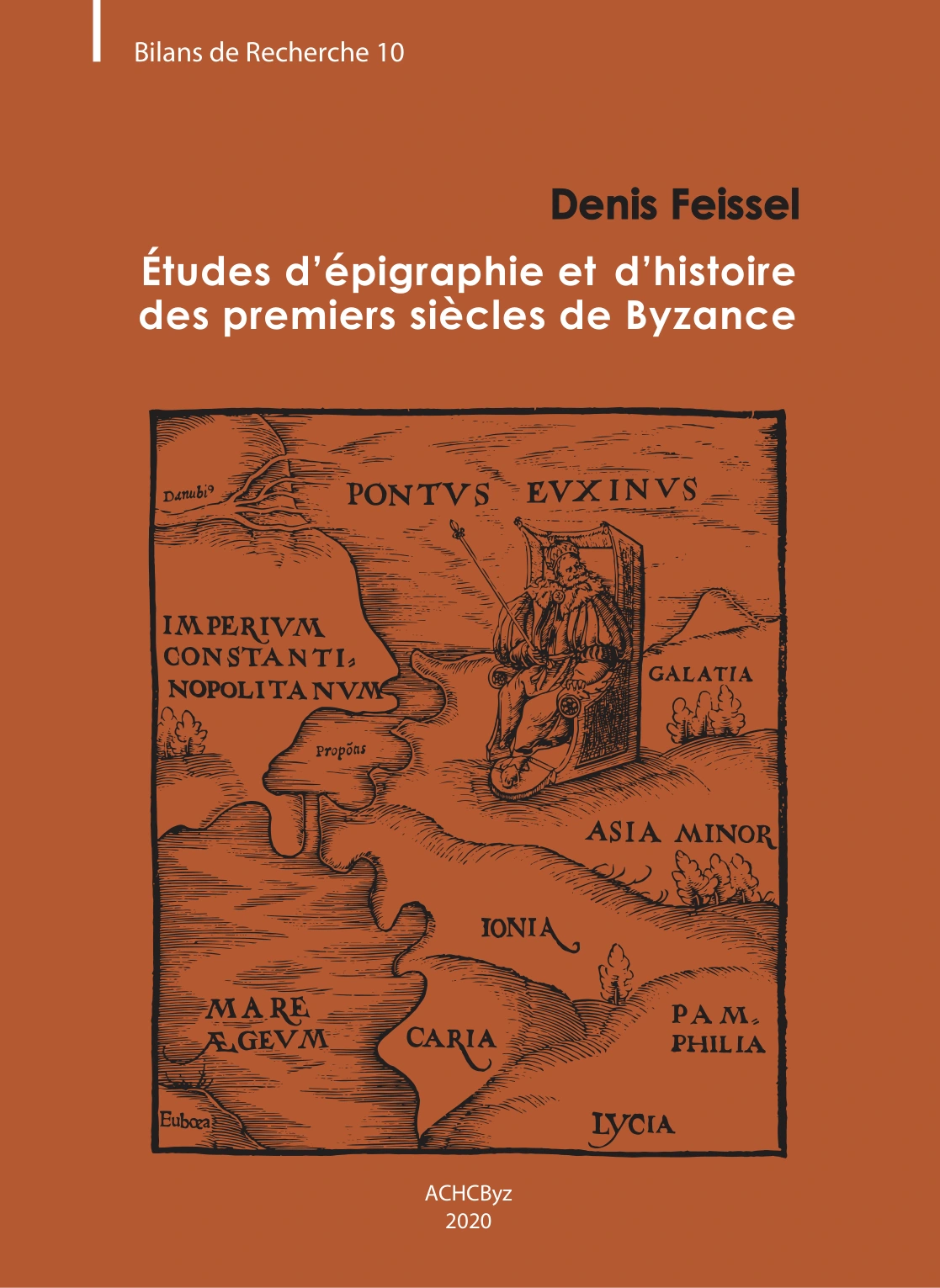
Études d’épigraphie et d’histoire des premiers siècles de Byzance
€60.00
Rated out of 5 stars based on
review(s)
Documents, droit, diplomatique de l’Empire romain tardif
€40.00
Rated out of 5 stars based on
review(s)
Comments (0)
Your review appreciation cannot be sent
Report comment
Report sent
Your report cannot be sent